Abstract
Background
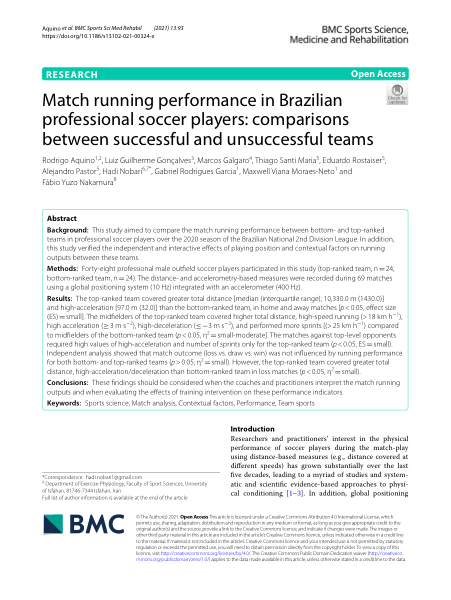
This study aimed to compare the match running performance between bottom- and top-ranked teams in professional soccer players over the 2020 season of the Brazilian National 2nd Division League. In addition, this study verified the independent and interactive effects of playing position and contextual factors on running outputs between these teams.
Methods
Forty-eight professional male outfield soccer players participated in this study (top-ranked team, n = 24; bottom-ranked team, n = 24). The distance- and accelerometry-based measures were recorded during 69 matches using a global positioning system (10 Hz) integrated with an accelerometer (400 Hz).
Results
The top-ranked team covered greater total distance [median (interquartile range); 10,330.0 m (1430.0)] and high-acceleration [97.0 m (32.0)] than the bottom-ranked team, in home and away matches [p 18 km h−1), high acceleration (≥ 3 m s−2), high-deceleration (≤ −3 m s−2), and performed more sprints [(> 25 km h−1) compared to midfielders of the bottom-ranked team (p
Description
The study compares match running performance in Brazilian soccer players based on team success.