Abstract
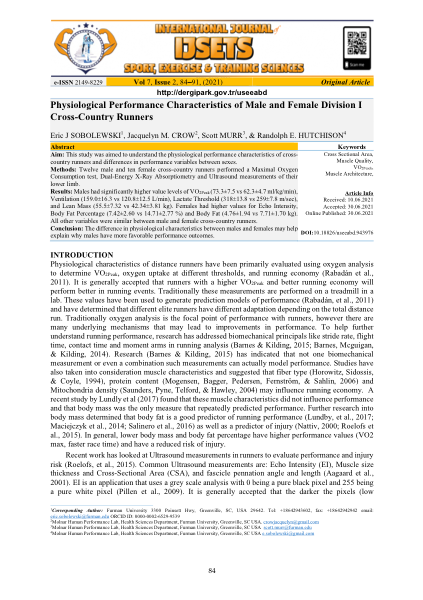
A im: This study was aimed to understand the physiological performance characteristics of cross- country runners and differences in performance variables between sexes. Methods: Twelve male and ten female cross-country runners performed a Maximal Oxygen Consumption test, Dual-Energy X-Ray Absorptiometry and Ultrasound measurements of their lower limb. Results: Males had significantly higher value levels of VO2Peak (73.3±7.5 vs 62.3±4.7 ml/kg/min), Ventilation (159.0±16.3 vs 120.8±12.5 L/min), Lactate Threshold (318±13.8 vs 259±7.8 m/sec), and Lean Mass (55.5±7.32 vs 42.34±3.81 kg). Females had higher values for Echo Intensity, Body Fat Percentage (7.42±2.60 vs 14.71±2.77 %) and Body Fat (4.76±1.94 vs 7.71±1.70 kg). All other variables were similar between male and female cross-country runners. Conclusion: The difference in physiological characteristics between males and females may help explain why males have more favorable performance outcomes.
Description
The study analyzes physiological differences in performance between male and female Division I cross-country runners.